
School Garden: Project Participants Met With Biologists At The Academy Of Sciences
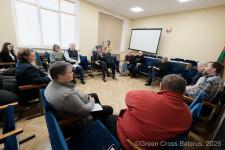
On February 18, 2026, within the School Garden project, a meeting with researchers from institutes and laboratories of the National Academy of Sciences of Belarus was held. The main objectives of the meeting were to discuss the current activities of the project and plans for the upcoming summer season, as well as to identify new stakeholders.
The meeting began with a short greeting from Alexander Tchaikovsky, Director of the Scientific and Practical Center for Bioresources of the National Academy of Sciences of Belarus (SPC for Bioresources). Vladimir Shevtsov, the director of the Green Cross Belarus NGO (GCB), who was the moderator of the meeting, briefly traced the history of the School Garden project, emphasizing that since it started a network of initiative rural schools with school sites was created. And participants of the network are ready to conduct and support researches, that can be very effective for solving scientific problems, in particular in the study of invasive species, which is aimed at the initiative "Beware, dangerous guests!".
Anatoly Kulak, a leading researcher at the Laboratory of Terrestrial Invertebrates at the SPC for Bioresources, briefly described the initiative. Being immersed in the problem of invasive insect species and understanding the danger of their spread, in the spring of 2025 Anatoly Kulak invited the participants of the School Garden network to join the observation of invasive insects. Then, in addition to the environmental, he outlined the social significance of network research, which can become one of the ways to educate future biologists and people responsible for preserving natural diversity.
However, the developed methodology and a specially created communication channel did not give the expected result. This raised the question of how to motivate participants and make interaction with them more effective. Natalia Sviatkina, GCB project coordinator, briefly described numerous consultations with both teachers and methodologists, after which it became obvious that the proposed methodology was not enough, and a more developed program with detailed information about the species was needed for observation.
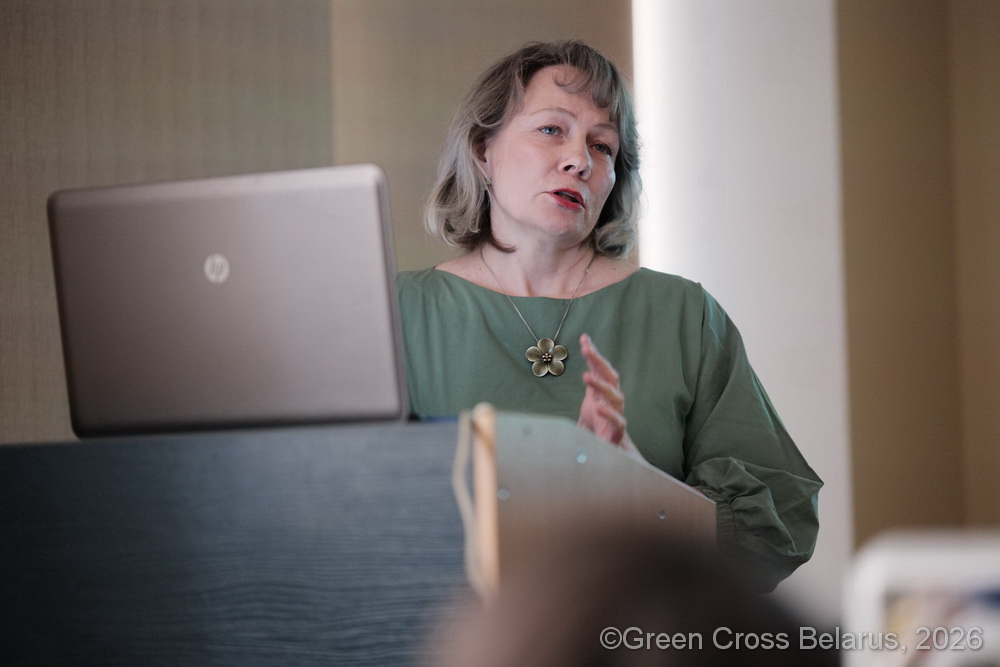 At the request of the GCB an online course "Network Ecological Research: a methodological course on the study of invasive species and biodiversity" was developed by tutors of the educational project "Kryly.BY" Angela Zhuravel and Semion Levy. The course was conducted from January 14, 2026 for 5 weeks. Angela Zhuravel briefly described the results of the course. According to her, the course can be called in demand – more than 100 people signed up for it, including not only teachers, but also inspectors of regional departments of natural resources, foresters and volunteers. A third of the enrolled students reached the end of the course, which is a good result for online learning. The course participants were offered systematic knowledge in the field of biological invasions of Belarus and biodiversity, and training was conducted on the use of naturalistic online platforms. The course leader expressed the hope that at least 30 people would actively participate in the observations after completing the course.
During the subsequent discussion, Arkady Skuratovich, senior researcher at the Laboratory of Flora and Plant Systematics at the Institute of Experimental Botany of the National Academy of Sciences of Belarus, supported the idea of involving citizens in scientific observations and research, and called for a certain incentive system to be developed, citing some examples from the past and current practice of encouraging collectors. He also expressed interest in involving schoolchildren more in the collection of the Herbarium of the Academy of Sciences, and stated that he was ready to compile a list of plants, observations of which in many areas are missing from the Herbarium.
The idea of eco-education by the School Garden network was also supported by Elena Gaiduchenko, head of the Ichthyology Laboratory at the SPC for Bioresources. However, realizing that it is very difficult to conduct direct observations in the direction of the laboratory, she sees great help in spreading information about invasive fish species using specially developed information materials. She also noted that education should begin in kindergarten, and children are most active and curious between the ages of 7 and 14.
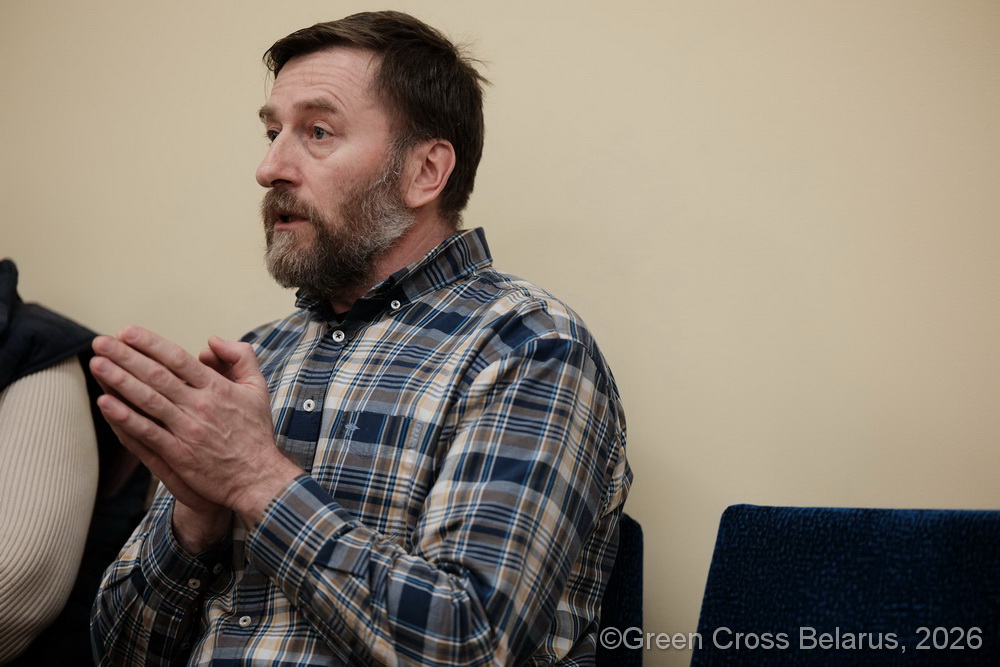 Anatoly Kulak also touched upon the topic of spreading information about the problem, citing his experience of working with weather TV shows. However, most of the participants expressed doubts about the effectiveness of this method, since the proposals of scientists often do not fit into the media editorial plans. In the opinion of the majority, the most realistic method may be the direct messaging the population on the subject by scientists within the lectures, both for specialists and for all interested parties, or by trained volunteers from among teachers and schoolchildren. An example of such enlightenment was a field seminar held by the GCB in the Glubokoe district in November 2025.
Valery Tikhomirov, an employee of the Botanical Garden of the National Academy of Sciences of Belarus, noted that it is quite possible to involve citizens and schoolchildren in plant observation, but in his experience, even after training, only a few remain active. He also pointed out that the subject of research in the project should be more clearly defined – biodiversity in general, as in the case of the Herbarium, or focusing on individual species. Valery Tikhomirov himself would prefer biodiversity.
In turn, Oleg Maslovsky, head of the laboratory of Resources and cadastre of the flora of the Institute of Experimental Botany, suggested not to spray on a large number of species, especially when it comes to invasions. In his opinion, it is necessary to focus on those that really threaten local ecosystems, such as Sosnovsky hogweed and Canadian goldenrod, in order to effectively adjust government programmes to control them.
Anatoly Kulak, while supporting this idea, nevertheless proposed expanding the list of studied species to include potentially dangerous species and local invasions.
As a result, it was decided that the scientists would make suggestions to supplement the list compiled for the online course and help in creating information materials. The strategy for distributing information materials and training volunteers will be discussed later.